
How Professional Wrestling Has Evolved: From Regional Promotions to a Global Entertainment Industry
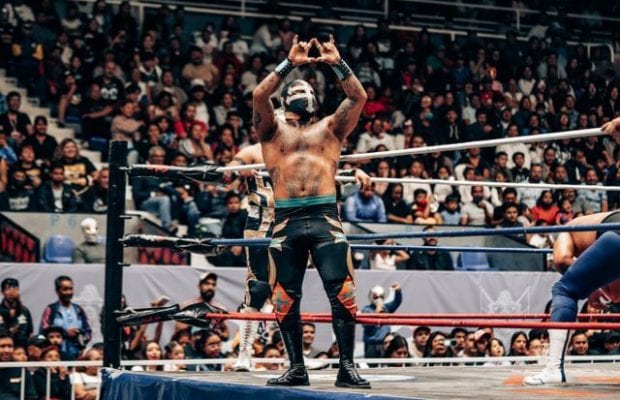
Professional wrestling didn’t start out as a billion-dollar spectacle beamed into living rooms across six continents. It started small. Territorial, even. And the journey from smoky armories to sold-out stadiums says a lot about how entertainment itself has changed over the last century.
The Territory Era: A Patchwork of Regional Promotions
Before the 1980s, wrestling in the United States operated more like a collection of independent city-states than a single industry. Promoters carved out geographic territories—Texas, the Carolinas, the Pacific Northwest—and wrestlers moved between them, building fresh personas in each new market. There was no single “champion” the way there is today; instead, dozens of regional titles existed simultaneously.
This system had its charm. Local promoters knew their audiences intimately, and storylines could be tailored to specific crowds. But it also meant limited reach. A wrestler could be a legend in Memphis and a complete unknown three states over. That fragmentation couldn’t last forever.
Cable Television Changes the Rules
Everything shifted once cable television entered the picture. Suddenly, one promotion could broadcast into homes far beyond its home turf, and that changed the economics of the entire business overnight. Vince McMahon’s expansion of the then-WWF in the mid-1980s is the textbook example: he bought up talent contracts, ran shows in rival territories, and effectively absorbed or outcompeted the regional promotions that had defined wrestling for decades.
By the 1990s, the “Monday Night War” between WWF and WCW turned wrestling into appointment television for millions. Ratings wars, surprise debuts, shocking storylines—wrestling had become mainstream pop culture, not a niche regional hobby anymore.
Streaming and the Global VPN Connection
Fast forward to today, and the way fans actually watch wrestling has transformed just as dramatically as the product itself. Instead of waiting for a local channel to carry a broadcast, fans now stream shows directly through services that aren’t always available in every country at the same time—or sometimes at all. That’s led plenty of wrestling fans to start using a VPN to unlock streams that would otherwise be geo-blocked, watching shows live rather than hunting for grainy re-uploads days later.
The era of VPN apps is here. A tool like VPN optimized for Android makes it simple: pick a server location, connect, and suddenly a broadcast meant for another region plays without a hitch. It’s worth noting that setup takes minutes—most fans just download VPN apps for PC, install one, and get back to watching before the opening match even starts. For anyone tired of “this content isn’t available in your region” messages, VeePN has become something of a quiet staple in a wrestling fan’s toolkit.
Wrestling Becomes a Truly Global Industry
Here’s where things get interesting: wrestling isn’t just an American export anymore. Japan’s New Japan Pro-Wrestling built a completely different style—more strike-heavy, more focused on match psychology—that Western fans now watch obsessively. Mexico’s lucha libre tradition, with its masked luchadores and high-flying acrobatics, has influenced move sets across every major promotion worldwide. The UK, Germany, India, and Australia all have thriving independent scenes today.
Consider a few numbers that illustrate the shift:
- WWE now broadcasts its programming in more than 30 languages across roughly 170 countries and territories.
- AEW, launched in 2019, built a national U.S. television deal within its first year—something that would have taken a regional promotion a decade to achieve in the pre-cable era.
- NJPW’s biggest annual event, Wrestle Kingdom, regularly draws tens of thousands of live attendees at the Tokyo Dome, a venue capacity that dwarfs most old-school territory shows combined.
That’s not incremental growth. That’s a completely different industry.
The Business Side: From Handshake Deals to Media Empires
The financial scale today would be unrecognizable to a 1970s territory promoter working out of a small office with a phone and a filing cabinet. Modern wrestling promotions now negotiate media rights deals worth hundreds of millions of dollars annually, sign multi-year streaming partnerships, and operate merchandise pipelines that span the globe. WWE alone has reported annual revenue exceeding $1 billion in recent years, a figure built on live events, television rights, and direct-to-consumer streaming combined.
As one longtime industry commentator put it, “Wrestling used to sell tickets to a building. Now it sells attention to a planet.” That’s a blunt way of putting it, but it’s not far off.
Social Media Turned Fans Into Participants
Twitter reactions, TikTok clips, Reddit breakdowns of botched spots—today’s wrestling fandom isn’t passive. Fans dissect storylines in real time, and promotions have learned to write around that watching rather than ignoring it. A single viral clip can turn a mid-card wrestler into a trending topic overnight, something that simply wasn’t possible when the only feedback loop was a letter to a wrestling magazine.
That connectivity works both ways, though. Fans traveling abroad for conventions or live events often rely on public Wi-Fi at arenas and hotels, and that’s exactly the kind of situation where a browser-based option comes in handy. For example, the free VPN extension available through the Chrome Web Store lets fans browse ticket sites and streaming platforms with an extra layer of privacy without installing a full standalone app. Small convenience, but a real one.
What Comes Next
Where does wrestling go from here? Probably further into streaming, further into international co-productions, and further into short-form content that lives on phones rather than television sets. Some analysts predict hybrid formats—part sports broadcast, part reality show, part social media event—will define the next decade of the industry.
One thing seems certain, though: the days of wrestling being confined to a single region, a single television deal, or a single audience are long gone. What started as a patchwork of local promotions fighting for regional bragging rights has become a genuinely global entertainment machine, one stream, one border-crossing broadcast, and one viral clip at a time.
-
-
Tiffany Stratton Ass Photos
Tiffany Stratton is a badass with a great ass. Check out these hot photos of the WWE Superstar's sexy booty on display. Tiffany Stratton is an American professional wrestler, amateur bodybuilder,...
Hot Zelina Vega Photos
See these hot photos of Zelina Vega, an American professional wrestler who performed for WWE from 2017 to 2026. Following her departure from WWE in April 2026, she rebranded herself...

Sol Ruca Ass Photos
Sol Ruca is a badass with a great ass. Check out these hot photos of the WWE Superstar's sexy booty on display. Sol Ruca is an American professional wrestler, below-average surfer,...
-

Design Custom T-Shirt Graphics Fast With a Free AI Image Generator
Personalised T-shirt graphics are key to showcasing individuality, branding, and memorable merchandise. Dreamina AI simplifies the process of creating original artwork for apparel designs by utilizing text prompts, reference images,...
Create a Talking Detective Avatar for a Noir Crime Story
The city never sleeps, and neither does your detective. Noir lives on mood: a flickering streetlamp, a cigarette that never gets lit, and a narrator who sounds like he’s seen...

Everyday Signs That Your Hormones May Be Changing
Hormones can have a surprising influence on everyday life. They are involved in many of the body’s essential processes, including the menstrual cycle, sleep, energy, mood, appetite, and reproductive health....



0 comments